
Tariff Uncertainty Returns
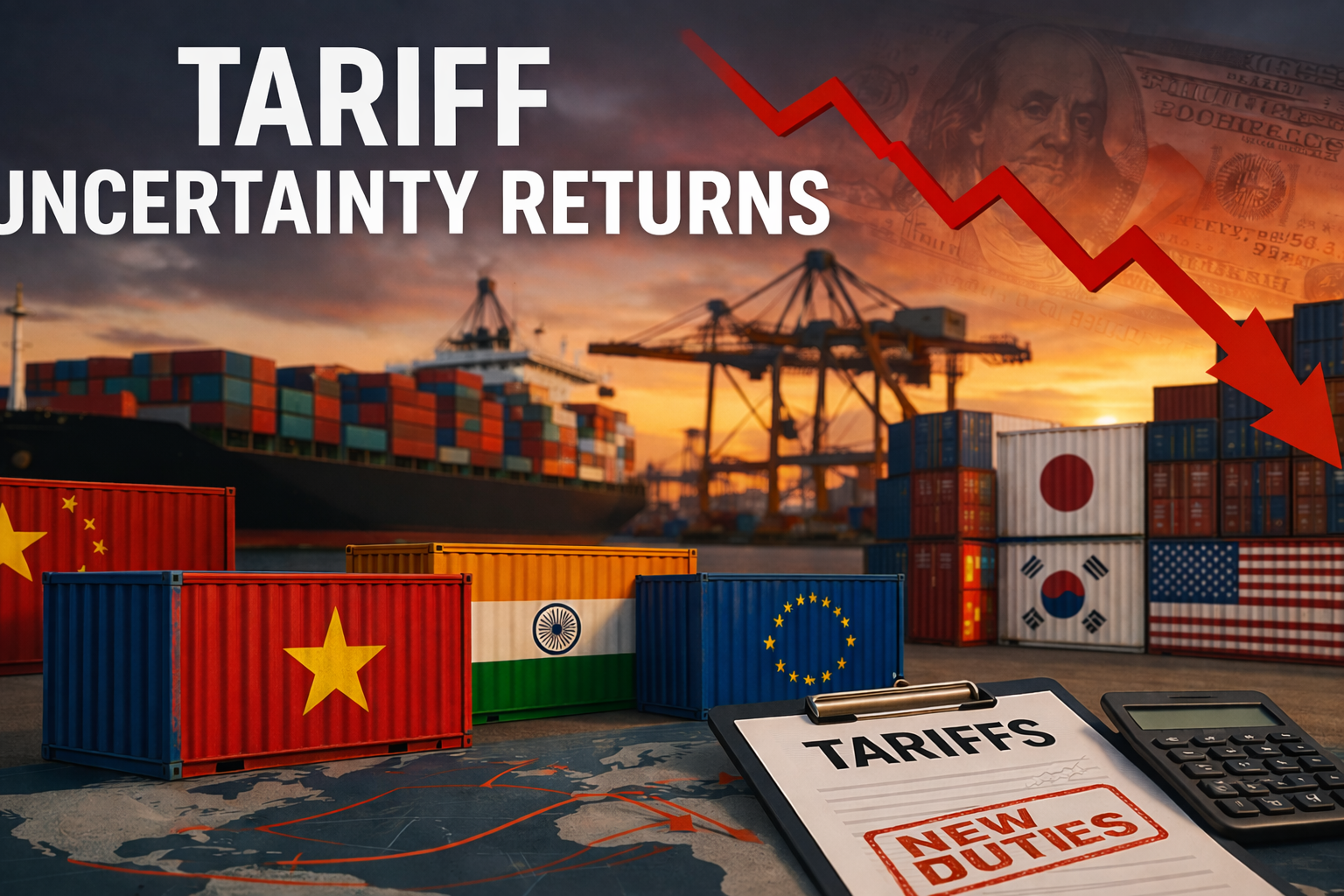
US importers received a brief moment of relief earlier this year when a February decision by the US Supreme Court overturned a major tariff program that had resulted in billions of dollars in duty payments. For many businesses, the ruling created hope that at least some of the extraordinary cost pressure of the past several years might finally ease.
That relief now appears likely to be temporary.
The US government has already begun moving toward a new tariff framework that could restore much of the same pressure under a different legal path. For importers, retailers, manufacturers and international supply chain stakeholders, this is not simply a legal story. It is a commercial story, an operational story and, for many companies, a planning problem that is arriving at one of the most sensitive times of the year.
In recent days, the Office of the United States Trade Representative, USTR, launched two separate investigations under Section 301 of the Trade Act of 1974. One focuses on what the administration describes as structural excess capacity and production in manufacturing sectors. The second centers on forced labor concerns. Together, these investigations cover a very broad range of countries and trading partners, including many that US importers have increasingly relied upon as alternatives to China.
That is the key issue businesses should not overlook.
For the last several years, many importers responded to elevated China tariffs by diversifying sourcing into countries such as Vietnam, India, Indonesia and others. That strategy made sense in an environment where the primary tariff risk was concentrated on China. The new Section 301 investigations suggest that the next phase of US trade policy may be much broader. If additional duties are imposed following these investigations, the cost advantage of sourcing from certain so-called alternative markets may narrow significantly.
In other words, the old workaround may no longer work the same way.
This matters because Section 301 is not an unfamiliar or experimental tool. It is one of the most established trade enforcement mechanisms available to the US government. During President Trump’s first term, Section 301 was used to impose tariffs on a very large volume of Chinese imports, and those tariffs proved durable. They remained in place through changes in administrations and became embedded in long-term sourcing, pricing and supply chain decisions across multiple industries.
That history is why many trade professionals see the current move as more significant than the now-overturned tariff program. The recent Supreme Court decision addressed tariffs imposed under emergency powers. Section 301 stands on a more established statutory foundation and has a much stronger record of withstanding legal and political challenges.
For importers, that distinction is not academic. It changes the risk profile.
A tariff program that may be reversed quickly is disruptive enough. A tariff program with a reasonable chance of lasting for years is something else entirely. It affects sourcing strategy, purchase commitments, vendor negotiations, customer pricing, margin forecasts and even long-term facility and inventory decisions.
The timing makes the situation even more serious.
Many US retailers and importers begin making important seasonal purchasing decisions well before the winter holiday period. Ocean bookings, factory production slots, inventory planning and replenishment cycles for peak season do not wait until the end of the year. They begin months in advance. That means businesses are now being asked to make commitments in an environment where the duty structure for the second half of the year could still shift materially.
This creates a difficult planning dilemma.
Do companies move ahead with orders to protect inventory flow and customer service, while accepting that landed costs may rise unexpectedly? Or do they delay commitments and risk product shortages, production disruption or higher freight costs later if demand tightens and capacity becomes constrained?
Neither option is attractive.
There is also a second layer of complexity beyond the tariffs themselves. If new duties are imposed across a larger number of trading partners, customs compliance and administrative requirements will become more demanding. Importers may need to revisit product classifications, confirm country of origin positions, review supplier documentation and monitor new enforcement guidance with greater frequency. Where forced labor concerns are involved, scrutiny on supply chain transparency and supporting records is also likely to intensify.
That means the burden will not be limited to higher duty bills.
It will also show up in internal workload, customs brokerage coordination, procurement reviews, compliance oversight and communication with customers trying to understand why costs and timelines are changing yet again.
For many businesses, especially small and mid-sized importers, that hidden burden can be just as disruptive as the tariff itself.
Another important takeaway is that this is no longer just a China conversation. China remains central to the US trade policy debate, and there is little doubt that it continues to be viewed by Washington as a principal source of industrial overcapacity concerns. But the latest investigations make clear that the current administration is looking much more broadly. Major trading partners in Asia and Europe are now part of the discussion. That widens the range of industries and import programs potentially exposed to future action.
This broader scope has serious implications for supply chain diversification strategies. Companies that believed they had substantially reduced tariff risk by moving away from China may now find that they have reduced concentration risk while still remaining highly exposed to trade policy risk.
That is an uncomfortable but important distinction.
What should businesses be doing now?
First, they should avoid assuming that current tariff levels will remain in place. Scenario planning is essential. Landed cost models should be updated across key products and major sourcing countries. Companies should test what happens if duties increase by 10%, 15% or more, and determine where those increases can be absorbed and where customer pricing may need to change.
Second, importers should review upcoming purchase orders and production commitments with greater urgency. Orders tied to critical seasonal programs, promotional periods or customer service obligations may require earlier action than originally planned.
Third, supplier documentation deserves immediate attention. Companies should confirm origin claims, ensure commercial documentation is clean and consistent, and prepare for the possibility of greater customs scrutiny.
Fourth, communication matters. Internal stakeholders, including finance, procurement, sales and operations teams, need to be aligned on the fact that this is a developing issue with potentially significant cost and service implications.
Finally, businesses should stay close to experienced international logistics and trade professionals who are following these developments in real time.
Trade policy can shift quickly. The legal basis may change, the list of affected countries may expand, the implementation timeline may accelerate, and the practical consequences often arrive before the market has fully absorbed the announcement. Companies that wait for complete certainty are often forced into reactive decisions. Companies that monitor developments closely and prepare early are in a much stronger position to manage risk.
At PNG Worldwide, we are monitoring this situation closely. We understand that our customers depend on predictable supply chains, clear communication and timely guidance, especially when policy changes have the potential to affect costs, transit planning and sourcing decisions. While the details of these investigations are still developing, the direction is clear enough to warrant close attention now.
This is not the time for complacency.
The trade environment remains fluid, and businesses involved in international sourcing should be prepared for the possibility of additional tariffs, increased compliance demands and renewed pressure on inventory planning ahead of peak season.
If you have questions about how these developments may affect your supply chain, sourcing strategy or international shipments, please reach out to PNG Worldwide’s international team. Our team is ready to help review your exposure, discuss options and support your planning as the situation evolves.
View All News Articles